
Quirky Facts About the Ancient Art of Alchemy and Its Mysteries
From ouroboroi and water baths to porcelain, phosphorus, and popes banning “multiplication,” alchemy’s story is far stranger—and richer—than the stereotype of gold-obsessed cranks.
What Alchemy Was (and Wasn’t)
Alchemy was a many-headed enterprise that blended practical craft, natural philosophy, medicine, spirituality, and symbol. Its goals ranged from chrysopoeia (making gold) and elixirs of longevity to more interior quests of purifying matter and self. It lived for centuries across Greek-Egyptian Alexandria, the Islamicate world, India, China, and medieval-to-early-modern Europe.
Alchemists saw the cosmos as a living continuum: celestial influences corresponded to earthly metals; laboratory cycles mirrored inner transformation. The workshop was at once a laboratorium and an oratorium—a place of hands-on tinkering and meditative patience. Transformation had “color” stages—nigredo (blackening), albedo (whitening), citrinitas (yellowing), and rubedo (reddening)—thought to unfold in both the flask and the alchemist’s soul.
“As above, so below; as below, so above.”
That oft-quoted maxim is traditionally linked to the enigmatic Emerald Tablet, a short Hermetic text with fuzzy origins (earliest witnesses in Arabic) that fueled centuries of commentary and metaphor.
Quirky Facts You Can Drop at a Dinner Party
- “Bain-marie” (a gentle water bath used in kitchens and labs) is named for Maria the Jewess (also called Mary/Maria Prophetissa), a pioneering Hellenistic alchemist credited with inventing the water bath, the tribikos (three-armed distiller), and the kerotakis (a sealed apparatus for heating and sublimation).
- The alembic—the classic distillation head—comes via Arabic (al-anbīq) from Greek (ambix, “cup”). Distillers, perfumers, and chemists owe a lot to this one curved piece of glassware.
- Alcohol originally meant a very fine powder (especially of antimony, al-kuḥl) before shifting to “purified spirit of wine.” Words wander.
- That famous snake eating its tail, the ouroboros, adorns the Chrysopoeia of Cleopatra (attributed to the elusive Cleopatra the Alchemist, not the Ptolemaic queen). It circles the Greek motto “hen to pan” (“the all is one”).
- The “peacock’s tail” (cauda pavonis)—a fleeting rainbow sheen in the vessel—was prized as a colorful omen of progress in the work.
- The cryptic emblem V.I.T.R.I.O.L. expands to “Visita Interiora Terrae, Rectificando Invenies Occultum Lapidem” (“Visit the interior of the earth, and by rectifying you will find the hidden stone”). A riddle, an instruction, a meditation.
- When old books show a green lion devouring the sun, it likely encodes a corrosive dissolving gold—visual shorthand for a lab step cloaked in mythic skin.
- Chinese alchemists searching for elixirs famously hit on an unintended formula: gunpowder. Not great for immortality, excellent for fireworks and warfare.
- Pope John XXII issued a bull in 1317 targeting fraudulent “multipliers” of gold; in England, the Act Against Multipliers (1404) outlawed transmutation schemes. It was repealed in 1689 under William and Mary.
- Newton wrote hundreds of thousands of words on alchemy—far more than most realize—copying, annotating, and experimenting in pursuit of nature’s “vegetative spirit.” The father of gravity also chased the Stone.
- The mysterious author Eirenaeus Philalethes, long cited by adepts, was very likely George Starkey, a Bermuda-born, Harvard-educated alchemist who emigrated to England and influenced Robert Boyle.
- Hennig Brand discovered phosphorus in 1669 while distilling and calcining many, many buckets of urine in a bid for the Philosopher’s Stone. The room must’ve been memorable.
- Johann Friedrich Böttger, imprisoned to make gold for Saxony’s ruler, helped crack Europe’s recipe for hard-paste porcelain in the early 1700s. His alchemy funded a dynasty of teacups.
- Decknamen (“cover-names”) hid recipes in poetic riddles: Diana (silver), the Red King (sulfur or gold), the Black Crow (putrefaction), the Hermaphrodite (conjunction of opposites), and more.
- “Gibberish” is often said to come from “Geber” (Jābir/Geber), but that etymology is debated. The texts could indeed be opaque—but not necessarily the origin of the word.
- Paracelsus popularized the medical turn in alchemy, championing chemically prepared remedies and positing a universal solvent, the alkahest—which, amusingly, would also dissolve its own container if it existed.
- The homunculus—a putative miniature human bred in a flask—lurks in some later alchemical lore, especially around Paracelsian circles. It’s a mirror of anxieties and hopes about life’s generation.
- Modern physics has performed literal transmutation in particle accelerators, converting elements (even making tiny amounts of gold). It works—just not economically.
Alchemy Across Civilizations
Greco-Egyptian and Late Antique Roots
In Roman Egypt and late antiquity, figures like Zosimos of Panopolis recorded visions, apparatus, and techniques. Maria the Jewess and Cleopatra the Alchemist (if distinct historical persons) stand out as named women in early alchemy—credited with devices and evocative diagrams. The craft was practical (dyes, alloys, glass) but spoke a religious-metaphoric language.
Islamicate Transformations
From the 8th century onward, Arabic-writing scholars systematized techniques and apparatus. The vast “Jābirian” corpus (attributed to Jābir ibn Ḥayyān, Latinized as Geber) and authors like al-Rāzī described substances, processes, and kit. Later Latin writers under the name “Pseudo-Geber” detailed powerful mineral acids and aqua regia, pushing metallurgy and analysis to new heights. Words like alembic, alkali, and elixir crossed into Europe with the texts.
China: Elixirs, Fireworks, and Inner Alchemy
Chinese alchemy split into waidan (outer, mineral elixirs) and neidan (inner, meditative practices). Experiments with cinnabar and mercury sometimes produced lethal “immortality” pills, yet the same tradition seeded technologies like saltpeter-sulfur-charcoal mixtures (gunpowder) and advanced ceramics and metallurgies.
India: Rasashastra and Metallurgy
Indian rasashastra integrated Ayurveda with mercury–sulfur operations to make medicines and metals. Medieval zinc production by distillation at places like Zawar in Rajasthan demonstrates sophisticated control of high-temperature processes centuries before zinc’s isolation in Europe.
Symbols, Stages, and Strange Gear
Planetary Metals and the Week
Alchemists aligned metals with planets and days: Sun–gold (Sunday), Moon–silver (Monday), Mars–iron (Tuesday), Mercury–mercury (Wednesday), Jupiter–tin (Thursday), Venus–copper (Friday), Saturn–lead (Saturday). The cosmos ticked inside the crucible.
Stages and Signs
- Nigredo (blackening): putrefaction, dissolution, the “black crow.”
- Albedo (whitening): cleansing, sublimation, lunar gleam.
- Citrinitas (yellowing): dawn of the sun, rare but classic in older schemes.
- Rubedo (reddening): perfection, the “Red King,” tincturing power.
- Coniunctio: the alchemical “marriage” of opposites, often pictured as a hermaphrodite.
Glass and Fire
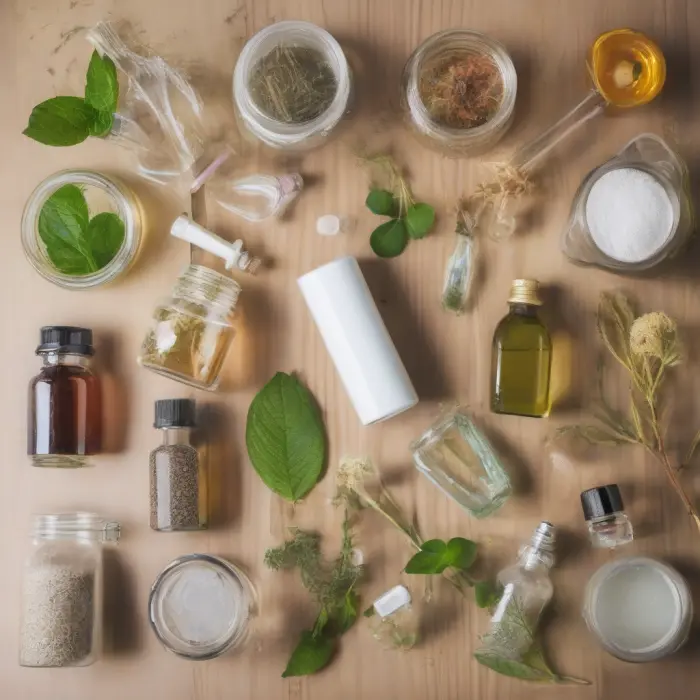
- Alembic: the curved distillation head sitting on a cucurbit (boiling flask).
- Athanor: a steady, long-burning furnace (name from Arabic al-tannūr, “oven”).
- Pelican: a double-armed vessel for continuous reflux—returns its “blood” (distillate) to the “young.”
- Kerotakis: sealed heating chamber for sublimations and vapors.
- Philosopher’s Egg: a sealed flask where the “embryo” of the work matures.
Enduring Mysteries and Debates
- Stone or symbol? Was the Philosopher’s Stone a literal substance, a spiritual allegory, or both? Many texts operate on two levels at once.
- Emerald Tablet origins: The earliest versions are in Arabic; medieval Latin translations made it canonical. Its true authorship remains unknown.
- Geber’s identity: The Arabic Jābir corpus and the Latin “Pseudo-Geber” texts represent distinct traditions, long entangled under one prestigious name.
- Did anyone really make gold? Claims abound; convincing, replicable evidence is absent. Tricks with gilded alloys and gold salts could fool patrons and onlookers.
- Secrecy’s purpose: Alchemists guarded trade secrets, navigated legal/religious dangers, and used allegory to encode multi-layered practices and experiences.
From Furnace to Laboratory: Alchemy’s Real-World Legacies
It’s simplistic to call alchemy “proto-chemistry,” yet its workshops seeded many of chemistry’s tools, terms, and techniques. Distillation, sublimation, filtration, crystallization, and precipitation were perfected through craft. Strong mineral acids (nitric, sulfuric) and aqua regia entered the metallurgical repertoire; glassware diversified; and experiment gained authority alongside book learning.
- Materials and industry: Improved dyes, inks, cosmetics, metallurgy, glassmaking, and mining. European hard-paste porcelain emerged from an alchemical prison project in Saxony.
- Discoveries by detour: Phosphorus from urine (Hennig Brand, 1669) and advances in distilling spirits and perfumes came via alchemical curiosity.
- Language we still use: words like elixir, quintessence, tincture, acid, alkali, sublimate, fix, and volatile are alchemical heirlooms.
- Science and skepticism: Boyle’s The Sceptical Chymist challenged scholastic “qualities,” pushing experimental methods that would reshape natural philosophy—while Boyle himself quietly remained alchemy-curious.
Curiosity Cabinet: Texts and Treasures to Peek At
- Zosimos of Panopolis: visionary treatises tying apparatus to spiritual work.
- Chrysopoeia of Cleopatra: the ouroboros and “the all is one.”
- Jābir/Geber traditions: Arabic Jābirian works and Latin “Pseudo-Geber” on mineral acids.
- Al-Rāzī (Rhazes): practical manuals and classifications of substances.
- Ripley Scroll: sprawling illustrated parchment of the whole work; multiple copies survive.
- Mutus Liber (1677): an almost wordless picture-book of operations and meditations.
- Michael Maier, Atalanta fugiens (1617): 50 emblems each paired with a short fugue—alchemical music for the eye and ear.
- Newton’s alchemical papers: notebooks, excerpts, and experiments in painstaking detail.
Mini-Glossary
- Alkahest
- A hypothesized universal solvent, often discussed by Paracelsians; more idea than item.
- Alembic
- Curved distillation head; emblem of alchemy’s glassy heart.
- Athanor
- Steady furnace for long, gentle heating.
- Pelican
- Reflux apparatus named for a mother pelican “feeding” her young with her own blood.
- Quintessence
- The “fifth element” distilled beyond the four classical elements; later, the purest essence.
- Tincture
- A solution thought to impart color and virtue—ideally, the Stone’s reddening power.
- VITRIOL
- Acrostic for a famous maxim urging inward descent and rectification; also refers to sulfates (“vitriols”).
- Fix/Volatile
- Stable, unchanging vs. fleeting, vaporous—both literal lab behavior and rich metaphor.