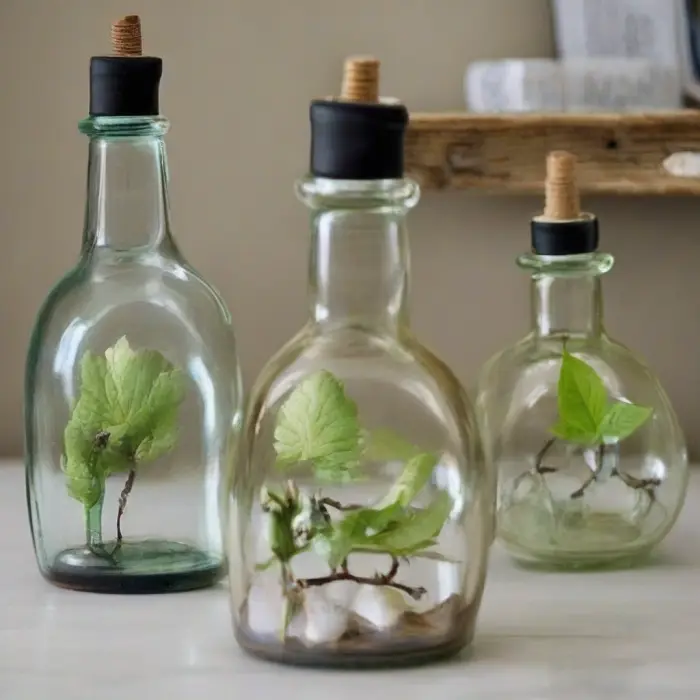
An empty glass bottle can suggest a decorative arrangement before it suggests a construction project. Compare its outline, colour and proportions with other objects in the room. You might prefer an individual accent or a group connected by a repeated colour or ribbon.
Start by deciding where the display will stand and what role it will have. Sketch an arrangement on a tray or shelf and leave room to handle the objects. Choose an appropriate stable location rather than fitting glass into a crowded edge or frequently disturbed area.
A paper tag, a removable ribbon or an arrangement of decorative stems offers a different starting point from cutting the glass. Consider what can be removed or changed later. Keep the display intentionally decorative; a bottle arrangement is not evidence of a functioning closed plant habitat.
Inspect the bottle before planning reuse. Do not treat a chipped or cracked container as a suitable craft base. Any paint, adhesive or other finish must be appropriate to its intended use and handled according to its instructions. Appearance does not establish whether a container is suitable for food or drink.
Cutting, drilling, heating, electrical conversion and fuel-burning projects require their own methods and suitability checks. They are outside these decorating ideas. A photograph cannot provide a complete specification for those uses, and an ordinary bottle is not automatically suitable for them.
When the arrangement is complete, keep notes about the materials and intended decorative use, especially if it is a gift. Revisit the layout if the space changes. Reuse can be a personal design choice without claiming that every project is cheaper, safer or environmentally preferable.


Discussion