

Earth-like planet that may contain water studied by NASA's Webb telescope - CBS News
What Webb is seeing, why “Earth-like” doesn’t mean “Earth twin,” and how scientists test for water on distant worlds.
Overview
Reports highlighted by CBS News describe how NASA’s James Webb Space Telescope (JWST) is probing the atmosphere of a distant, potentially Earth-like world for signs of water. The possibility of water matters because, on Earth, liquid water is a key ingredient for life. With Webb’s unprecedented sensitivity to infrared light, astronomers can look for water vapor and other molecules in a planet’s atmosphere when that world passes in front of—or behind—its host star.
The central takeaway: Webb is beginning to detect chemical fingerprints consistent with atmospheres that could, under the right conditions, support liquid water. That does not confirm oceans or habitability, but it is a crucial step toward understanding which worlds might be most promising for future, deeper study.
Which planet are we talking about?
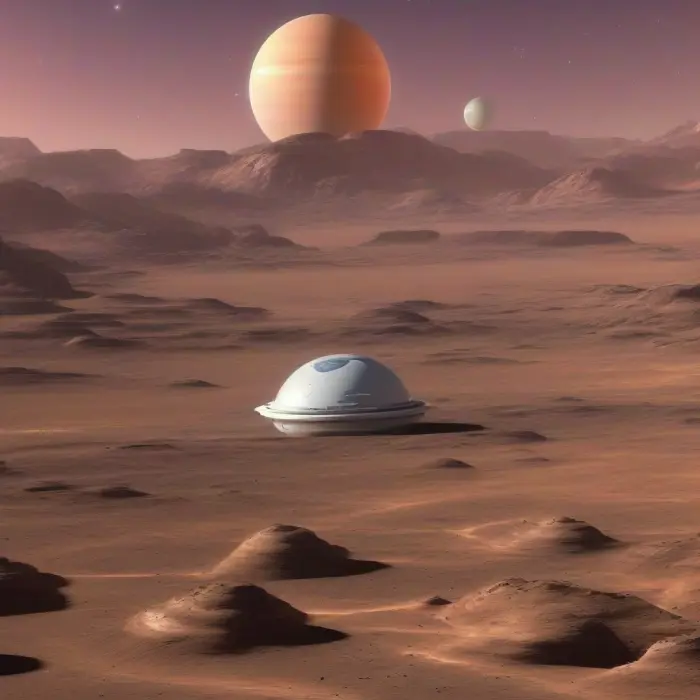
Headlines about an “Earth-like planet that may contain water” have often centered on a small set of nearby super-Earths and sub-Neptunes now under intense JWST scrutiny. Two leading examples frequently discussed in news coverage include:
- K2‑18 b: Roughly 120 light-years away in the constellation Leo, this world is larger than Earth (a “sub‑Neptune”) and orbits in its star’s temperate zone. Webb observations have revealed a mix of gases such as methane (CH4) and carbon dioxide (CO2)—a combination consistent with the possibility of water vapor in a hydrogen-rich atmosphere. While sometimes described as “Earth-like” in headlines, K2‑18 b is likely quite different from Earth and may be a “hycean” world—potentially with a deep ocean beneath a thick atmosphere.
- LHS 1140 b: About 48 light-years away, this super-Earth orbits within the habitable zone of a cool red dwarf star. It has long been considered a strong candidate for a dense atmosphere and possibly surface water if conditions are right. JWST observations are being used to search for atmospheric signatures, including water vapor, though confirmation requires multiple, independent datasets.
Other small exoplanets observed by Webb—such as GJ 9827 d—have shown evidence of water vapor in their atmospheres, but many are too hot for liquid water on the surface. The nuance: a detection of water vapor does not automatically imply habitable conditions.
How Webb looks for water
JWST studies exoplanet atmospheres primarily through transit and eclipse spectroscopy:
- Transit spectroscopy: When a planet crosses in front of its star, some starlight filters through the planet’s atmosphere. Molecules like H2O, CH4, CO2, and CO absorb specific wavelengths, leaving faint “fingerprints” in the star’s spectrum.
- Secondary eclipse and phase curves: When the planet passes behind the star, or as it orbits and shows different “phases,” Webb can isolate the planet’s thermal glow and reflected light, helping to constrain temperature, clouds, and chemistry.
Webb’s instruments—especially NIRSpec, NIRISS, and MIRI—cover a broad range of infrared wavelengths where water and carbon-based molecules are easiest to spot. By combining multiple observations, scientists can refine models of the atmosphere and reduce uncertainties.
What we know so far—and what we don’t
- Signs consistent with water: Several JWST datasets show spectral features compatible with water vapor in certain exoplanet atmospheres. In cooler, temperate-zone planets, this raises the possibility of conditions suitable for liquid water somewhere (in clouds, high atmosphere, or—more speculatively—on or beneath the surface).
- Not a confirmation of oceans: Detecting water vapor does not prove the existence of surface seas. A planet’s pressure, temperature, clouds/hazes, and atmospheric composition all shape whether liquid water can exist.
- “Earth-like” is a broad term: In headlines, it may mean similar size, rocky composition, or simply that the planet lies in the “habitable zone.” Many of the worlds Webb is studying are larger than Earth and could be enveloped by thick, hydrogen-rich atmospheres unlike Earth’s nitrogen-oxygen air.
- Stellar activity matters: Many nearby targets orbit red dwarfs, which can produce flares and high-energy radiation that strip or alter atmospheres. Webb measurements must account for starspots and variability that can mimic or mask atmospheric signals.
Why the discovery matters
Finding credible atmospheric signatures—especially of water—in small, temperate exoplanets is a milestone on the path to assessing habitability beyond our solar system. Webb is delivering the first detailed chemical portraits of worlds only a few tens to hundreds of light-years away. These data help:
- Prioritize the most promising planets for intensive follow-up.
- Refine theories of how atmospheres form, evolve, and retain water.
- Prepare for the next generation of observatories designed to look for potential biosignatures.
What comes next
- More Webb transits and eclipses: Repeated observations increase precision, help confirm tentative features, and constrain clouds, hazes, and temperature structures.
- Cross-instrument confirmation: Using NIRSpec, NIRISS, and MIRI together reduces the chance that a feature is an artifact and improves confidence in the molecular identifications.
- Synergy with other telescopes: Ground-based facilities and the Hubble Space Telescope provide complementary monitoring of stellar activity and additional wavelength coverage.
- Future missions: ESA’s ARIEL and NASA’s Roman Space Telescope will expand the census of exoplanet atmospheres. Farther ahead, mission concepts aim to directly image Earth-size planets and analyze their reflected light for gases like O2, O3, CH4, and CO2 together.
Quick questions and answers
Does Webb’s detection mean there’s life?
No. Water is necessary for life as we know it, but it is not sufficient. Life detection would require a suite of gases in disequilibrium and a robust, multi-instrument case that rules out non-biological explanations.
Why are many “Earth-like” candidates bigger than Earth?
Planets slightly larger than Earth are easier to study because they block more starlight and have thicker atmospheres that imprint stronger spectral signatures. True Earth twins remain challenging for current instruments.
How confident are scientists about water vapor detections?
Confidence depends on the planet, data quality, and wavelength coverage. Some cases are strong, others remain tentative until repeat observations confirm the signals across multiple instruments.
Bottom line
The Webb telescope is opening a new era in the study of small, temperate exoplanets. Reports featured by CBS News capture a pivotal moment: we are beginning to see molecular clues—possibly including water vapor—in the atmospheres of nearby worlds. While “Earth-like” does not mean “another Earth,” these measurements mark essential progress toward answering one of humanity’s oldest questions: how common are the conditions for life beyond our own planet?