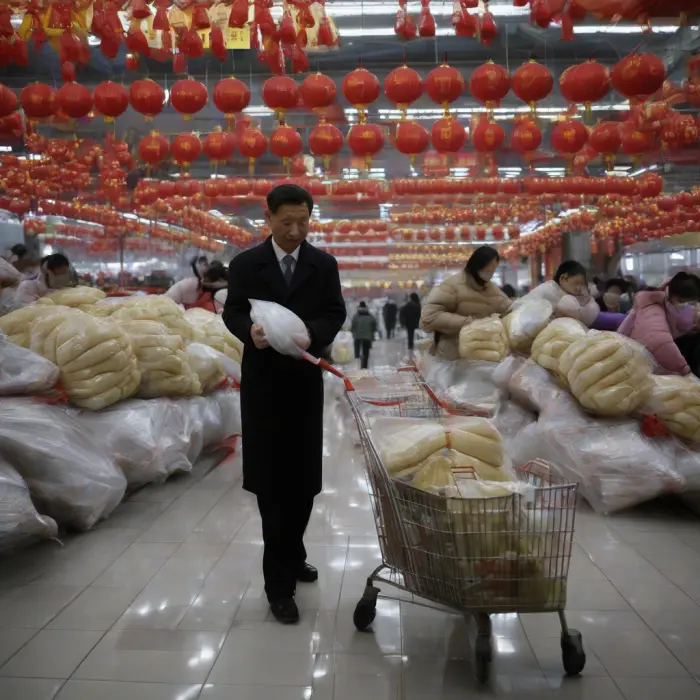



Tariff-exposed industries are losing jobs
Context: Media coverage, including reports from CNN, has brought renewed attention to how tariffs ripple through the labor market. Below is a comprehensive, original analysis of why tariff-exposed industries often face job losses, the mechanisms at work, and what policymakers and businesses can do about it.
Overview
Tariffs are designed to protect domestic producers by making imported goods more expensive. In practice, however, the broader economy is a tightly connected web: many American firms rely on imported inputs; trading partners retaliate; and price changes alter purchasing patterns. When these dynamics compound, the result is often a net employment decline in tariff-exposed industries—especially in sectors that either import intermediate goods or depend heavily on foreign markets for sales.
The experience of the past several tariff cycles—most notably the U.S.-China trade conflict—illustrates this paradox. Some producers see short-lived relief from foreign competition, but many more firms face higher costs and shrinking orders, and regions with concentrated manufacturing or export agriculture absorb outsized shocks. The cumulative effect: slower hiring, deferred investment, and, in many cases, net job losses.
What counts as a “tariff-exposed†industry?
An industry is tariff-exposed if its profitability and employment are sensitive to trade barriers. This exposure can occur via:
- Direct import competition: Finished goods that face tariffs (or counter-tariffs) that shift relative prices.
- Input dependence: Sectors that rely on imported components or raw materials (e.g., metals, electronics parts, chemicals) and face cost spikes when tariffs hit inputs.
- Export reliance: Industries for which foreign demand represents a large share of sales and that risk being targeted by retaliatory tariffs.
Manufacturing subsectors such as autos and parts, industrial machinery, electrical equipment, and fabricated metal products are classic examples. Agriculture and food processing are also vulnerable, primarily through retaliation and disrupted market access.
How tariffs translate into job losses
There are multiple transmission channels from tariffs to employment outcomes. The following mechanisms are the most important:
- Input-cost inflation: When tariffs raise the price of imported inputs—steel, aluminum, semiconductors, specialized machinery—producers face higher unit costs. Firms unable to pass those costs through to customers see tighter margins, production cuts, and slower hiring.
- Retaliatory tariffs: Trading partners often respond in-kind, targeting politically salient or high-value U.S. exports such as farm products, machinery, or consumer brands. Lost foreign sales can overwhelm any protective benefits at home.
- Demand substitution: Higher prices for tariffed goods encourage consumers and firms to substitute toward untariffed products, different suppliers, or even different technologies.
- Uncertainty shock: Policy uncertainty surrounding tariffs and trade negotiations delays capital expenditures and hiring. Managers postpone plant upgrades, automation decisions, and expansions while they wait for clarity.
- Supply chain reconfiguration costs: Over the longer run, companies may shift sourcing to non-tariffed countries, but this transition involves time, validation costs, and potential quality or logistics setbacks—pressuring employment during the adjustment.
Who gets hit the hardest?
- Midstream manufacturers: Firms that transform inputs into components (e.g., stamped metal parts, castings, printed circuits) are squeezed between higher input costs and buyers who resist price increases. Margins thin; payrolls often shrink.
- Export-oriented producers: Producers of farm goods, industrial equipment, and certain consumer products sell into global markets where even a modest retaliatory tariff can re-route orders to competitors. Employment in export hubs tends to be cyclical and sensitive to these swings.
- Small and medium-sized enterprises (SMEs): SMEs have less pricing power and thinner balance sheets. They also face fixed costs to retool supply chains or secure tariff exclusions, making them particularly vulnerable.
Regional impacts
The job losses from tariff exposure tend to be geographically concentrated:
- Industrial belts: Regions with clusters of metals, machinery, and automotive suppliers often experience outsized effects due to shared supply chains.
- Agricultural heartlands: Counties with high export intensity in crops like soybeans or pork feel the brunt of retaliatory measures, with downstream effects on local services and retail.
- Port and logistics hubs: Lower trade volumes reduce activity for warehousing, trucking, and freight services, adding secondary employment pressures.
Short-run versus long-run dynamics
The immediate aftermath of new tariffs often features price spikes, heightened uncertainty, and a pause in hiring. Over time, some firms adapt—securing non-tariffed suppliers, automating, or passing through prices. However, two caveats persist:
- Sticky adaptation costs: Supplier qualification, logistics rerouting, and re-engineering can take quarters or years.
- Persistent retaliation: If trading partners maintain countermeasures, export channels may not fully recover, leaving a lasting dent in employment.
What research and recent experience suggest
A broad academic and policy literature has examined the employment effects of tariffs and related trade frictions. While outcomes vary by sector and policy details, several themes recur:
- Input-cost effects dominate for many manufacturers: When the supply chain is global, protection at one link can raise costs at the next, reducing competitiveness and jobs.
- Export retaliation is potent: Targeted foreign tariffs can rapidly erode market share in commodities and differentiated goods alike, pressing exporters to scale back.
- Net employment effects skew negative in exposed sectors: Gains for a subset of protected firms are often outweighed by losses elsewhere in the chain.
- Consumers and downstream industries bear the cost: Higher prices filter through to households and business buyers, curbing demand and investment.
Media coverage, including from CNN, has echoed these findings by highlighting case studies of plants postponing expansions, suppliers cutting shifts, and farming communities managing lost contracts—narratives consistent with the broader empirical picture.
Policy options to mitigate job losses
Policymakers seeking to shield strategic industries without amplifying employment losses can consider:
- Narrowly targeted, time-bound measures: Focused and temporary relief, paired with clear sunset clauses, limits uncertainty and encourages productivity upgrades rather than dependence.
- Input exemptions or tariff-rate quotas: Excluding critical intermediate goods from tariffs or capping rates can prevent cost spikes that undermine downstream employers.
- Adjustment assistance and workforce development: Funding for retraining, relocation support, and apprenticeship programs helps displaced workers transition faster.
- Trade facilitation and diversification: Streamlining customs, supporting nearshoring or friendshoring where appropriate, and expanding market access through agreements can offset retaliation risks.
- Investment incentives for modernization: Tax credits or grants for automation, energy efficiency, and digitalization can lift productivity enough to absorb higher input costs.
Business strategies under tariff risk
Firms can reduce exposure to tariff shocks through proactive steps:
- Supplier diversification: Dual- or multi-sourcing from regions with lower geopolitical and tariff risk.
- Hedging and contracts: Financial hedges and long-term contracts that lock in prices or share cost risks.
- Design-for-resilience: Engineering products to accept interchangeable components from multiple sources.
- Localized production where feasible: Strategic co-location of final assembly with end markets to minimize cross-border tariff exposure.
- Data visibility: Investing in supply chain analytics to forecast tariff impacts and accelerate response times.
Distributional and equity considerations
Tariff-induced employment changes rarely fall evenly. Workers in smaller towns with single-industry dominance face steeper challenges than those in diversified metro areas. Older workers and those without postsecondary credentials may require more intensive support to switch occupations. Equity-focused policies—targeted training, childcare support for trainees, wage insurance, and mobility grants—can blunt the most acute social impacts.
The international backdrop
The global trading system has grown more fragmented, with more frequent use of tariffs, quotas, and targeted export controls. For multinational supply chains, this creates a patchwork of rules that complicates planning. While some reshoring or friendshoring can reduce exposure, it also reduces economies of scale and may keep prices elevated, reinforcing the very cost pressures that constrain employment growth.
Signals to watch
- Tariff scope and duration: Broader, longer-lasting measures correlate with larger employment effects.
- Retaliation patterns: Which sectors foreign governments target offers clues about upcoming job risks.
- Input price spreads: Gaps between domestic and world prices for key inputs signal margin pressures.
- Capital spending and PMI data: Softening orders and investment often precede employment cuts.
- Exclusion processes and trade diplomacy: Easing procedures or negotiated rollbacks can quickly alter outlooks.
Bottom line
Tariffs aim to support domestic industry, but in an economy built on globalized supply chains and export markets, they often raise costs, provoke retaliation, and depress hiring—especially in tariff-exposed sectors. Careful policy design, targeted relief, and proactive business strategies can soften the blow, but they rarely eliminate it. As coverage from outlets like CNN underscores, the human face of these macro forces is visible on factory floors, in farm towns, and across logistics hubs where even small changes in prices, orders, and uncertainty translate into real job outcomes.