A spectacular auction result, an unusual colour and a mineral known from few specimens are different kinds of distinction. Describing all of them as “the rarest gemstone” obscures those differences. These examples show why an individual jewel, a fine-quality variety and an entire mineral species should not be treated as interchangeable.
1. The Pink Star diamond
Sotheby’s reported that the 59.60-carat Pink Star sold in Hong Kong on 4 April 2017 for approximately 71.2 million USD. The buyer, Chow Tai Fook, renamed it CTF Pink Star. The auction house described the result as a new record for a diamond or jewel at the time. That dated sale concerns an exceptional individual stone; it does not make diamond the rarest mineral or establish a price for other pink diamonds.
2. Jadeite jade
GIA identifies colour, transparency and texture as the principal quality factors for jadeite. Fine material with an intense green colour and high translucency is particularly prized. Jadeite also comes in other colours, including lavender. Calling every piece “imperial” or exceptionally valuable would ignore the substantial differences among individual objects.
3. Blue-green colour-change garnet
A gemological study of material reported from near Bekily, Madagascar, described garnets that appeared blue-green in daylight and purple under incandescent light. The researchers linked this behaviour mainly to their relatively high vanadium content. This is a property of the studied material under specified lighting, not a promise that every blue-looking garnet will behave identically.
4. Painite
Painite’s history illustrates how rarity can change with discovery. George Rossman’s 2005 report describes its early recognition near Mogok, Myanmar, and the long period when only a few crystals were known. Later finds greatly increased the available material, although only a small proportion was suitable for faceting. Repeating an old specimen count as a current total would therefore be misleading.
5. Grandidierite
First described in southern Madagascar in 1902, grandidierite can range from bluish green to greenish blue. GIA’s 2015 report documented newly examined material and faceted samples reaching the market. The distinction between a mineral occurring in rock and transparent material suitable for a cut gem is important: those are not equivalent kinds of availability.
6. Musgravite
SSEF describes musgravite as a very rare collector mineral, first discovered in the Musgrave Range of Australia in 1967. It can resemble taaffeite and grey-to-violet spinel visually, which makes laboratory identification important. An attractive photograph alone cannot establish that a stone is musgravite, nor does rarity by itself determine its value.
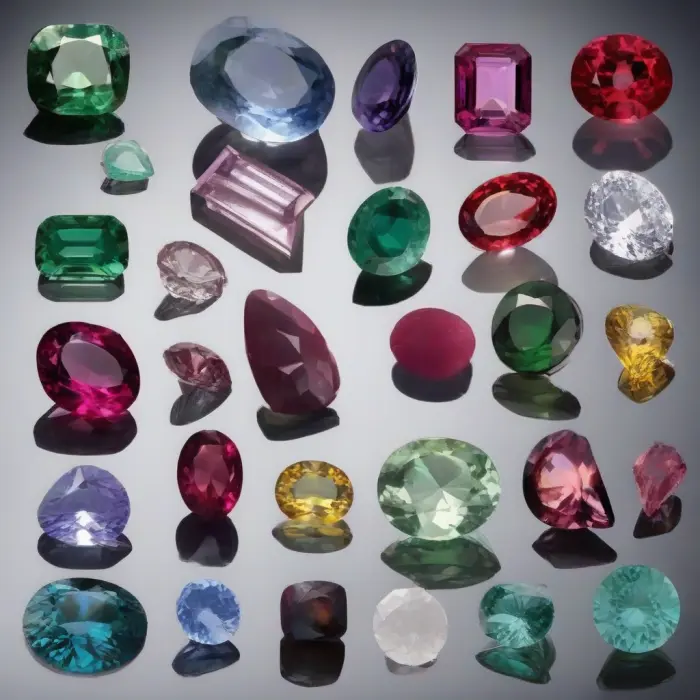
The cover is a conceptual gemstone illustration. It does not identify or authenticate the stones discussed.
Sources: Sotheby’s; GIA: Jadeite; GIA: Garnet; GIA: Painite (p. 356); GIA: Grandidierite; SSEF.


Discussion