

Mind-Blowing Facts About the Art and Science of Bonsai Trees
Bonsai literally means “tray planting,†but that simple phrase hides a world of biology, design, and centuries-old craft. These facts reveal why a palm-sized tree can change how you think about nature, time, and even physics.
1) Bonsai are not “dwarf trees†— they’re full-size species in miniature
Most bonsai are genetically identical to their full-size counterparts. A Japanese maple bonsai is still a Japanese maple; a pine bonsai is still a pine. Careful pruning, root management, and environmental control keep them small while preserving the species’ natural character — bark texture, leaf shape, seasonal color, and even flowers and fruit.
2) The “miniaturization†is a balance of hormones, not magic
Tree size is managed by manipulating growth hormones. Removing the apex reduces auxin-driven apical dominance, encouraging dormant buds to “wake up†and branch lower on the trunk. Root pruning and repotting stimulate new fine roots and shift the cytokinin supply, rebalancing shoot growth. The result: shorter internodes, denser branching, and a canopy scaled to the trunk.
3) Bonsai can bear full-size fruit — on a tiny tree
Because genetics aren’t changed, fruiting species can produce normal-sized fruit on miniature trees. A shohin crabapple dripping with apples or a tiny pomegranate with showy blooms looks surreal, but it’s perfectly natural. Some growers use dwarf cultivars for smaller fruit, but it’s not required.
4) Soil that isn’t “soil†keeps them alive
Classic bonsai “soil†is mostly inorganic particles like akadama, pumice, and lava rock. Why? Roots need oxygen as much as water. Large, well-graded particles create air spaces; water drains quickly, and oxygen can diffuse to the roots. In containers, fine potting soils can create a soggy perched water table that suffocates roots — a silent killer of bonsai.
Oxygen diffuses roughly 10,000 times slower in water than in air. The wrong substrate can drown a tree even if you never “overwater.â€
5) They form secret alliances underground
Bonsai roots partner with mycorrhizal fungi that extend the tree’s nutrient-gathering network and help fend off pathogens. Conifers (pines, spruces) are especially reliant on these relationships. Healthy bonsai soil teems with life you can’t see.
6) Styling uses physics and plant memory
Wiring isn’t just bending; it’s biomaterials engineering. Aluminum or copper wire holds branches while new wood forms and “sets†in place. Trees respond to mechanical stress with thicker, stronger wood (a phenomenon related to thigmomorphogenesis). Properly timed wiring makes curves permanent without damage — provided you remove wire before it bites.
7) Leaf reduction is an illusion of architecture
Leaves don’t shrink because genes changed; they appear smaller because ramified twigs produce more leaves with fewer resources per leaf, and because internodes shorten under high light, tight pruning, and optimized watering. Partial or full defoliation on appropriate species can trigger a second flush of smaller leaves — a technique used cautiously on healthy deciduous trees like maples and ficus (never on conifers).
8) They outlive us — sometimes by centuries
With consistent care, bonsai can become heirlooms that pass through many hands. Some documented specimens are well over 300 years old. A celebrated Japanese white pine in Washington, D.C., survived the 1945 Hiroshima blast and continues to grow today. Museums in Japan and Europe display other venerable trees, including ficus specimens reputed to be near a millennium in age.
9) Dormancy is non-negotiable biology
Temperate trees (maples, elms, junipers, pines) require winter dormancy triggered by day length and temperature. Without sufficient chilling hours, they weaken and die over time. That’s why “indoor bonsai†typically means tropical or subtropical species like ficus or jade. A maple on a warm windowsill in January is a slow-motion tragedy.
10) Tiny pots, huge engineering
A mature bonsai can thrive with only 1–3% of the root volume of a landscape tree. The trick is a dense mat of fine feeder roots, precision watering, and frequent repotting. Growers often use colanders or highly ventilated pots during development to turbocharge root ramification with extra oxygen exposure.
11) Bonsai design borrows from mountains, storms, and centuries
- Jin and shari: deadwood techniques that mimic lightning strikes, windburn, and ancient scars.
- Nebari: the flared root base that visually “locks†a tree to the earth, suggesting age and stability.
- Styles: formal upright (chokkan), informal upright (moyogi), slanting (shakan), cascade (kengai), semi-cascade (han-kengai), literati (bunjin), forest plantings (yose-ue), and more — each evoking a landscape story.
12) Branches follow math-like patterns
Branching in many trees approximates fractal geometry. As you refine a bonsai, you’re sculpting nested patterns — primary branch, secondary, tertiary — that echo each other at decreasing scales. The eye reads this self-similarity as “tree-ness,†even when the whole composition is only 25 cm tall.
13) Watering is a science of timing, not routine
“Water every day†is a myth. You water when the substrate approaches dryness — which may be twice a day in summer and every few days in winter. Particle size, wind, sun exposure, pot depth, and species all shift the schedule. Skilled growers read the tree and the soil, not the calendar.
14) Trees compartmentalize wounds like master engineers
When you cut a branch, the tree doesn’t “heal†so much as compartmentalize the injury, building chemical and physical barriers (described by the CODIT model) that limit decay. Bonsai artists exploit this to create smooth, natural-looking scars by timing cuts, selecting angles, and sometimes using concave cutters that encourage faster callus roll-over.
15) Air-layering and grafting can rewrite a tree’s story
Air-layering can create a new tree with a perfect nebari and trunk by inducing roots to form high on an existing stem. Grafting can place refined foliage on a powerful old trunk, or unite a delicate cultivar with a vigorous rootstock. These techniques are surgical — and transformative.
16) The pot is part of the poem — and the physiology
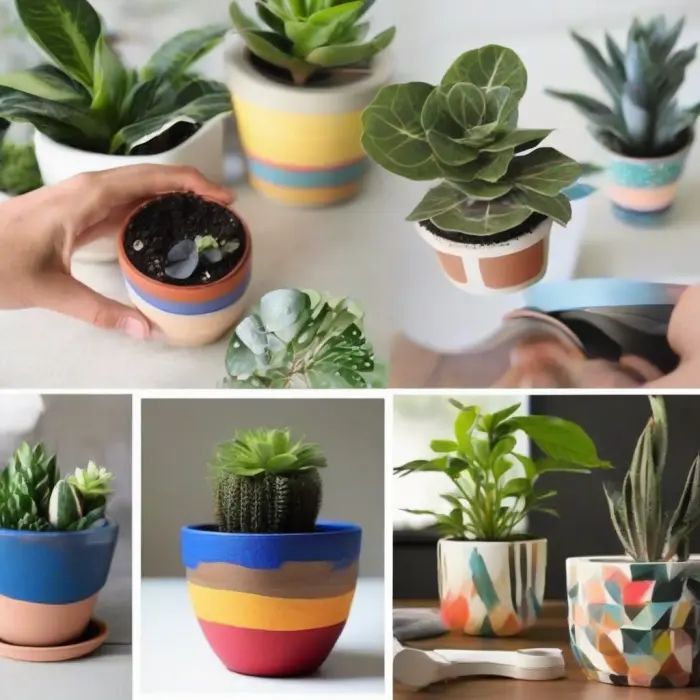
Unglazed clay breathes and cools; glazed pots hold moisture longer and often suit flowering or fruiting trees. Shallow pots dry faster and warm roots; deep pots buffer moisture and temperature swings. Even the pot’s color and texture shift the viewer’s sense of season and mood.
17) Penjing and bonsai: cousins with different dialects
Chinese penjing predates Japanese bonsai and often emphasizes landscapes and poetic scenes, sometimes with stones and figurines. Japanese bonsai typically focuses on the singular, idealized tree. Both celebrate the same living canvas through different traditions.
18) Development and refinement are different games
- Development phase: big containers or the ground, strong fertilizer, free growth to thicken trunks and set primary structure.
- Refinement phase: smaller pots, tighter watering and feeding, controlled energy management for fine ramification and silhouette.
Many “finished†bonsai cycle back into development to improve taper or nebari — a decades-long chess match.
19) Subtle light management sculpts structure
Sunlight drives back-budding and internode length. High light and good airflow produce compact nodes and tight foliage pads; shade yields long, leggy growth. Strategic thinning lets light penetrate the interior so dormant buds can activate where you want new twigs.
20) Some techniques are species-specific
- Decandling is used on Japanese black pines to create a second flush and balanced needle length. It is not used the same way (or at all) on many other pines.
- Defoliation suits ficus and many maples in strong health, but not conifers or weak trees.
- Clip-and-grow styling (minimal wiring) shines on species with strong back-budding and fast callusing, like Chinese elm.
21) Styling choices manipulate how the brain reads scale
Tapered trunks, thick low branches, and a wide nebari trick your brain into perceiving “age.†Negative space between foliage pads implies distance. Even moss acts as “miniature grass†to cement the illusion that you’re looking at a full-sized tree from far away.
22) Bonsai aren’t carbon sinks — but they are mindfulness machines
A small tree can’t sequester much carbon compared to a forest, but it can pull you into slow time. You make decisions whose best results appear five or ten years later. Few arts demand so much patience — and give so much back in quiet attention and daily ritual.
23) Water quality changes leaf color and health
Hard, alkaline water can raise substrate pH, locking up micronutrients and dulling foliage, especially in acid-loving species like azaleas. Many enthusiasts collect rainwater or cut tap water with distilled to keep pH and salts in check.
24) Repotting cadence is a clock you set by roots, not dates
Akadama gradually breaks down into finer particles, reducing aeration. Depending on climate and species, bonsai are repotted every 1–5 years to refresh structure and trim circling roots into a fine, efficient mat. The calendar doesn’t decide — the root ball does.
25) Ethics matter — especially for “collected†trees
Yamadori (wild-collected trees) often display ancient, weather-carved character you can’t fake. Responsible collection requires landowner permission, minimal ecological disturbance, and high aftercare survival rates. Many breathtaking bonsai started as rescue missions from construction sites or eroding slopes.
26) The smallest classes are shockingly complex
Shohin (under ~20 cm) and mame (under ~10 cm) bonsai push horticultural limits. Tiny pots dry in hours; every millimeter of wire placement and every leaf matters. Yet these micro-trees can convey the vastness of a cliffside pine in winter.
27) Bonsai tools are purpose-built for living wood
Concave cutters create scooped wounds that close cleanly. Knob cutters hollow old stubs without tearing bark. Root hooks, sieves, grafting knives, and raffia for protecting bent branches — it’s a toolkit where every shape respects the tree’s biology and the artist’s eye.
28) Timing can be everything — down to the week
Pruning just after spring flush differs wildly from late-summer pruning. Heavy root work often waits for early spring as buds swell (or late summer in warm climates) so recovery is swift. Miss the window and the same cut can set a tree back months.
29) The best bonsai hide human effort
The paradox of bonsai is to labor intensely so the tree looks untouched by human hands. A thousand tiny decisions vanish into a single natural impression — as if the wind, snow, and years alone created it.
30) A bonsai is never “finishedâ€
It grows, you respond; it responds, you adjust. Over decades, the collaboration becomes a biography in wood and bark — a living record of seasons, setbacks, and small victories. That ongoing conversation is, perhaps, the most mind-blowing fact of all.