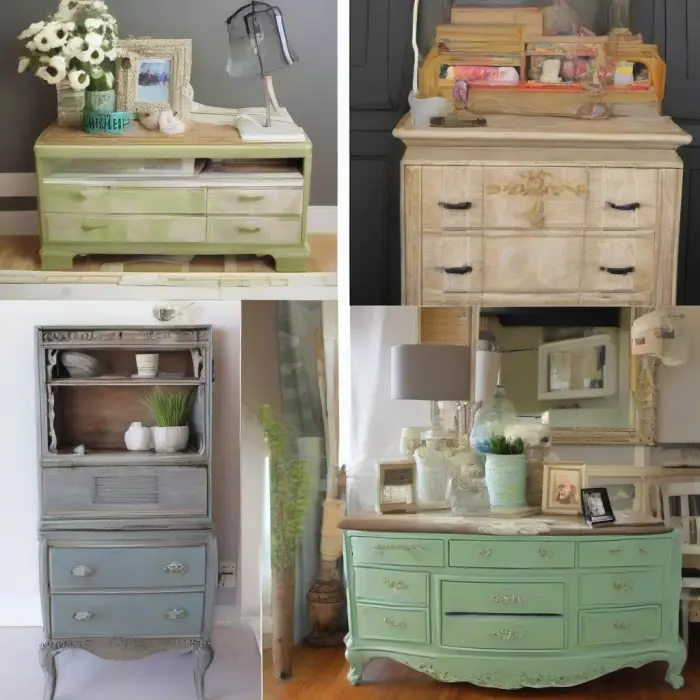
Before discarding a piece of furniture, consider whether its appearance could be refreshed. These are decorative ideas rather than building instructions; repairs, load-bearing changes and unfamiliar tools need suitable expertise.
1. Change the colour
A fresh finish can change the character of a cabinet or table. Choose a product suitable for its surface and follow the product instructions. Do not sand an unknown old coating without first establishing how it can be handled safely.
2. Refresh the fabric
New cushion covers offer a simple way to change a chair or sofa’s appearance. More extensive reupholstery may be a separate project for someone with the necessary skills.
3. Add patterned details
Wallpaper or other suitable decorative coverings can introduce a pattern inside a bookcase or on drawer fronts. Try a small, unobtrusive area first and keep openings and moving parts clear.
4. Rethink its use
An unused piece may suit another room or purpose. Treat ideas such as converting a ladder into shelving or a door into a table as design starting points, not ready-made safe structures; stability and support need assessment.
5. Use decals or stencils
Decals and stencilled designs can add a personal detail without changing the whole piece. Match materials to the surface and supervise any children taking part, using appropriate products.
6. Replace handles
Different knobs or handles can alter the look of a cupboard. Check that replacements fit the existing fixing points and function properly, without sharp edges or loose fittings.
7. Consider a decorative surface
A mosaic can give a tabletop a different appearance, but broken glass and tile edges need care. Use materials and methods suited to the piece, and seek help if cutting or finishing them is outside your experience.
Choose a project that fits the condition of the furniture and your skills. Keeping a useful piece in service can be satisfying without turning every item into a major renovation.


Discussion