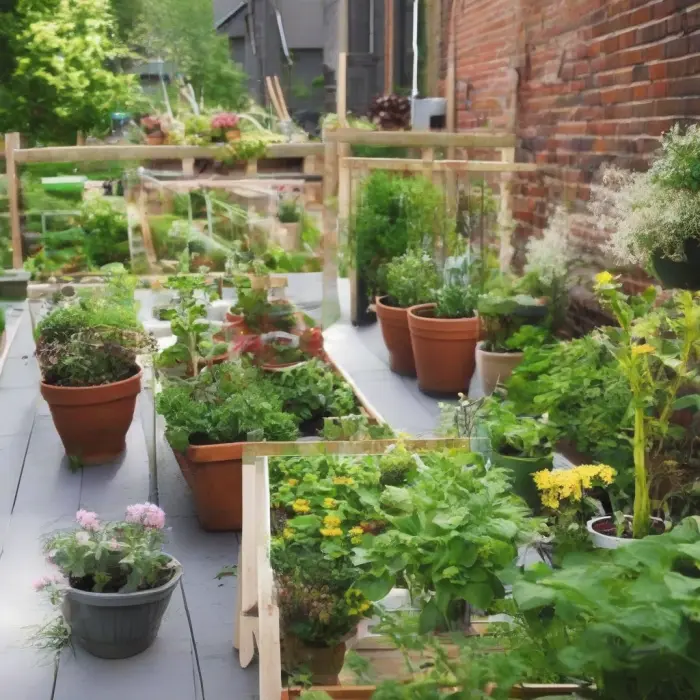
A container garden can bring growing space to a city home, but the available light and daily care matter more than filling every corner. University of Maryland Extension’s guidance focuses on vegetables and herbs. The cover is a conceptual garden illustration, not a structural plan or proof that a balcony can carry a particular load.
Look at the location first
Consider sunlight, access to water and the warmth of nearby walls or paving. Different crops have different light needs. Choose for those conditions and for the plant’s mature size, not just the size of the young plant at purchase.
Match container and growing medium
Give roots enough room and use suitable container-growing media. Containers need a way for excess water to escape. Adding a layer of stones does not improve drainage and can worsen waterlogging. Avoid repurposed containers that previously held paint, detergents or other chemicals.
Check before watering
Feel the growing medium below its surface before deciding whether to water. Container plants can dry more quickly than plants in the ground; weather and container material affect care. Do not assume that a small urban garden always retains moisture longer.
Keep the layout manageable
Plan access for ordinary care and account for drainage near neighbours or shared surfaces. Resolve support and property requirements separately before using elevated or hanging locations. Begin with a selection you can observe and adjust rather than treating the illustration as a construction guide.


Discussion