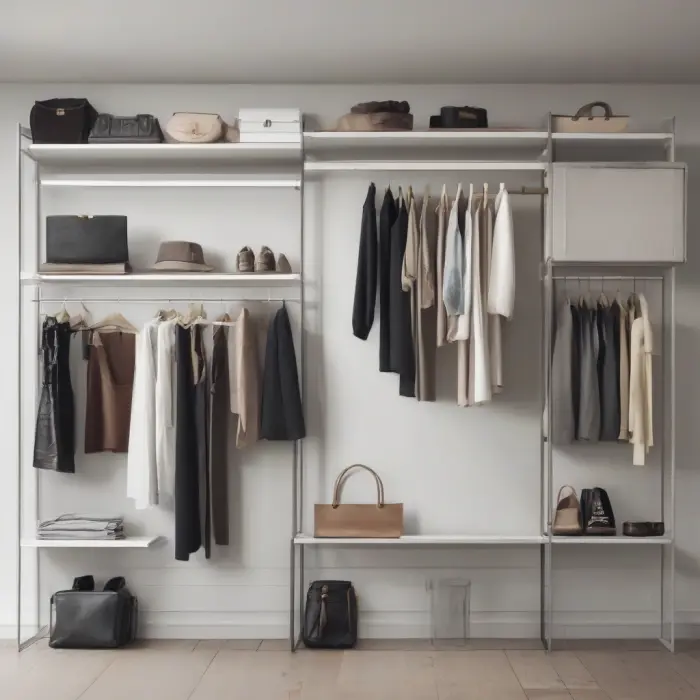
A minimalist wardrobe is a personal organizing choice, not a rule about how much clothing anyone should own. Aim for useful combinations and manageable care rather than replacing everything with a new matching set.
1. Audit your wardrobe
Try on what you have and consider fit, condition and use. An unworn item is not automatically waste: seasonal clothing, special-occasion pieces and repairable favorites may still be useful. Set uncertain items aside before deciding.
2. Define your style
Notice clothes you enjoy wearing and the activities you dress for. Consider comfort, climate, work requirements and your preferred colors instead of copying somebody else’s ideal wardrobe.
3. Build a useful core
Start with versatile pieces you already own. A shirt, trousers, dress or comfortable shoes may be useful examples, but no item suits everyone. Check laundry frequency and seasonal needs before reducing your selection.
4. Keep expressive pieces
Color, pattern or unusual textures can belong in a small wardrobe. Keep pieces you actually enjoy and can combine; minimalism does not require neutral colors or identical outfits.
5. Maintain and reassess
Check garments periodically for repair or alteration. Pass on clothing you genuinely no longer need through a suitable route, rather than discarding usable items to meet a target.
The right result is a wardrobe that serves your life. Fewer pieces may simplify choices, but neither savings nor less stress is guaranteed.


Discussion