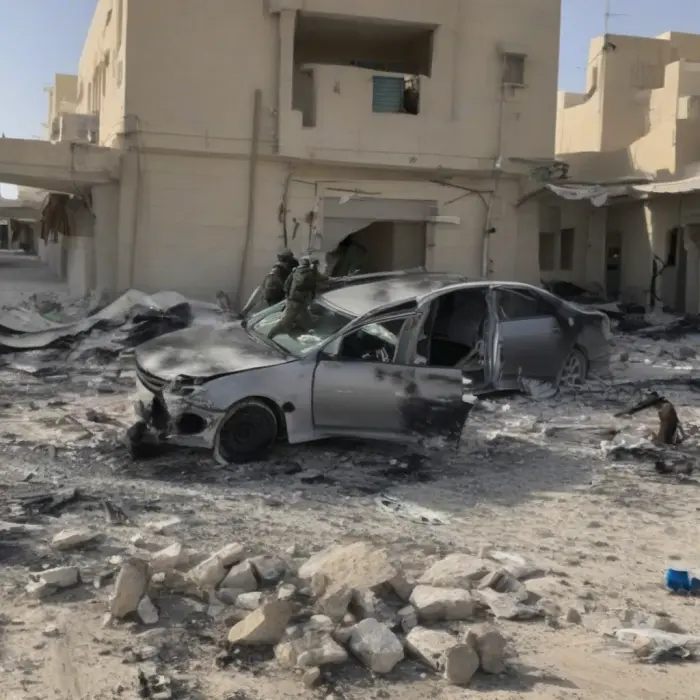



Canada is evaluating ties with Israel after Qatar attack: What the foreign minister’s remarks could mean
Following an incident in Qatar that regional media, including Al Jazeera, have attributed to Israel, Canada’s foreign minister said Ottawa is reassessing aspects of its relationship with Israel. Here’s an explainer on the context, possible policy steps, and what to watch next.
At a glance
- Canada’s foreign minister signalled a reassessment of certain facets of Canada–Israel relations after a reported attack on Qatari soil.
- Such a review could range from diplomatic démarches and export-permit scrutiny to coordination with allies in multilateral forums.
- The development intersects with Qatar’s role as a mediator in the Israel–Hamas war and broader regional security dynamics.
What reportedly happened
According to Al Jazeera’s coverage, authorities in Qatar have attributed a recent incident in their territory to Israel. Details, casualty figures, and official attributions may still be evolving. While Ottawa has not publicly released a full account, Canada’s foreign minister indicated that the government is evaluating how the episode affects its approach to Israel.
Because information can change quickly in fast-moving situations, readers should consult the latest official statements from the Government of Canada, the Government of Qatar, and trusted international outlets for confirmed updates.
Why this matters
- State sovereignty and norms: Any attack on the territory of a third country raises questions about sovereignty, potential violations of international law, and the acceptability of cross-border or extraterritorial use of force.
- Qatar’s mediator role: Qatar has hosted key diplomatic channels connected to Gaza and hostage negotiations. An incident on Qatari soil risks disrupting mediation, with knock-on effects for ceasefire prospects and humanitarian access.
- Canada’s policy consistency: Ottawa often frames its Middle East policy around international humanitarian law, protection of civilians, and a two‑state solution. A serious incident could pressure Canada to align rhetoric with tangible measures.
- Alliance management: Canada coordinates closely with G7 partners, NATO allies, and regional actors. Any shift in Canada–Israel ties will be weighed against allied positions and ongoing diplomatic efforts.
What “evaluating ties†could involve
“Evaluating ties†is a broad phrase. In practice, the government could consider some combination of the following steps, depending on facts established and allied coordination:
- Diplomatic measures: Formal démarches; summoning the Israeli ambassador; adjusting high‑level visits; or, in more serious scenarios, altering the level of diplomatic representation.
- Export controls: Reviewing existing and pending military export permits for consistency with Canada’s Export and Import Permits Act and the Arms Trade Treaty criteria (notably risks of serious violations of international humanitarian or human rights law).
- Targeted sanctions: Considering sanctions under Canada’s Special Economic Measures Act or Justice for Victims of Corrupt Foreign Officials Act (Magnitsky) against specific individuals implicated in serious violations, if credible evidence and legal thresholds are met.
- Intelligence and security cooperation: Reassessing modalities of information-sharing or cooperation that could have material implications for operations outside recognized conflict zones.
- Multilateral actions: Coordinating positions at the UN General Assembly, Security Council (via partners), Human Rights Council, and with the G7/EU; supporting impartial investigations or fact‑finding where appropriate.
- Consular and travel advisories: Updating guidance for Canadians in the region if the security environment in Qatar or nearby states is affected.
Background: Canada, Israel, and Qatar
- Canada–Israel: Canada has long maintained diplomatic relations with Israel, emphasizing Israel’s right to security alongside obligations under international law. In 2024, Ottawa paused approval of new export permits to Israel pending legal and humanitarian risk assessments, reflecting heightened scrutiny of materiel transfers during the Gaza conflict.
- Canada–Qatar: Canada and Qatar maintain cooperative ties in trade, education, aviation, and regional diplomacy. Qatar has played a high‑profile role as a mediator in hostage and ceasefire talks related to the Gaza conflict.
- Regional dynamics: Cross‑border strikes and targeted operations beyond active battlefields have periodically escalated tensions across the Middle East, complicating mediation efforts and raising legal debates about self‑defence, imminence, and proportionality.
Legal considerations
- Use of force and sovereignty: The UN Charter generally prohibits the use of force against the territorial integrity or political independence of any state, absent Security Council authorization or a lawful claim of self‑defence meeting necessity and proportionality tests.
- Extraterritorial actions: Targeted operations in third countries often trigger debates over consent, attribution, and the threshold for an “armed attack†justifying self‑defence, as well as the duty to prevent harm to civilians.
- Arms transfers: Under domestic law and the Arms Trade Treaty, Canada must assess whether exports could contribute to serious violations of IHL or IHRL; credible risks can require denial, suspension, or revocation of permits.
Domestic political landscape in Canada
Canadian public opinion on the Israel–Palestine file is diverse and strongly felt. Parliament, provincial leaders, civil society, and diaspora communities often press the government from different directions—some urging stronger support for Israel’s security and others calling for stricter conditionality, sanctions, or recognition steps regarding Palestinian statehood. Any adjustment to Canada–Israel ties is likely to spark debate across the political spectrum.
Potential scenarios
- Limited diplomatic censure: Ottawa issues strong statements and formal protests but stops short of structural changes, pending investigations and allied coordination.
- Targeted policy tightening: Canada expands or lengthens pauses on certain export permits; supports or initiates multilateral inquiries; and increases scrutiny of operational cooperation.
- Broader recalibration: If investigations substantiate severe breaches, Ottawa could consider deeper shifts, including sanctions or sustained diplomatic downgrades, while seeking to protect humanitarian channels and mediation efforts.
What to watch next
- Official attributions and evidence: Statements from Qatar, Israel, and independent investigators regarding responsibility, motive, and legal justification.
- Canadian government actions: Any updates from Global Affairs Canada on export permits, sanctions, or diplomatic steps.
- Allied coordination: G7/EU communiqués or UN initiatives that signal a collective response.
- Impact on mediation: Whether Qatar’s facilitation of talks is disrupted or reconfigured.
- Regional spillover: Changes in security postures across the Gulf and Levant, including travel advisories and energy market reactions.
About sources and uncertainty
This explainer is based on the headline and general context reported by Al Jazeera and on publicly known frameworks of Canadian foreign policy up to recent years. Specific operational details may still be developing. For the most accurate, up‑to‑date facts, consult official statements from the Government of Canada, the Government of Qatar, and multiple reputable news organizations.