NASA rover snaps a “turtle-shaped†rock nestled in ancient Martian terrain
A whimsical silhouette in a rover photo has stirred imaginations on Earth, but scientists say the eye-catching “turtle†is almost certainly the handiwork of Martian geology and wind.
A recent rover image from Mars has sparked a fresh wave of fascination: a small, turtle-like form seemingly tucked among layered, timeworn rocks. Outlets including Live Science highlighted the uncanny resemblance, and social media did the rest—zooming, outlining, and speculating about the “shell,†the “head,†and even the “flippers.†As arresting as the scene may appear, planetary scientists see something more familiar than fantastical: a fragment of bedrock sculpted by wind, sand, and time, captured at just the right angle to tickle human pattern-finding brains.
What the image most likely shows
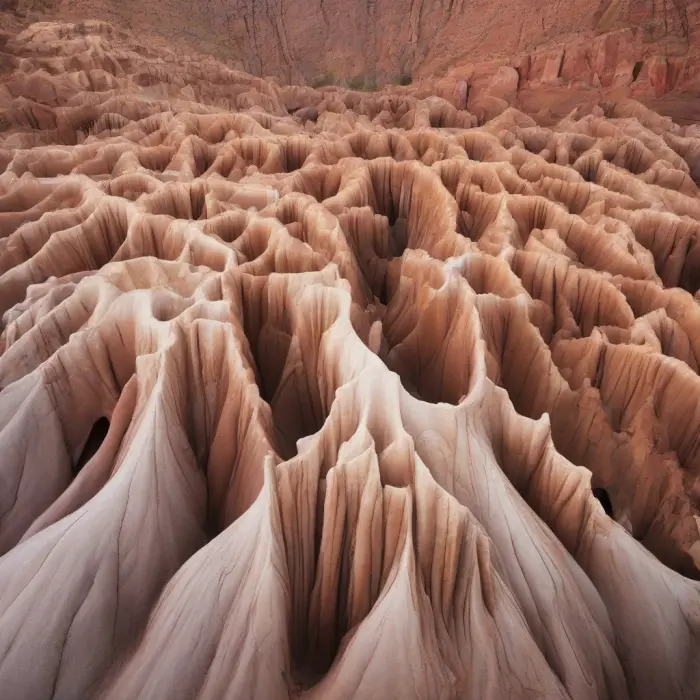
The “turtle†is best explained as a small, eroded block of sedimentary rock lodged within older, layered outcrops. On Mars, thin beds of mudstone, siltstone, and fine-grained sandstones—laid down billions of years ago by water or wind—can fracture along planes of weakness. Where the rock is harder, it resists erosion and remains as knobs and ledges; where it is softer, it abrades away, carving insets and undercuts. Over long intervals, this differential erosion creates silhouettes that echo familiar Earthly forms—faces, animals, utensils, even “doorways.â€
Two additional processes help sculpt these illusions:
- Concretions and cemented nodules: Mineral-rich fluids can precipitate cements that locally harden rock, yielding rounded “pebbles,†ribs, or shell-like veneers that erode more slowly than the host.
- Ventifaction: Persistent winds drive sand grains against rock surfaces, sandblasting them into smooth planes and sharp edges—sometimes shaping thin “plates†that look like fins or flippers.
Pareidolia: why our brains see turtles on Mars
The tendency to perceive faces and familiar shapes in random patterns has a name—pareidolia—and it is powerful. On Mars, pareidolia has a rich history: the “Face on Mars†from Viking orbiter images in the 1970s, spoons and bones in rover mosaics, and more recently, “doorways†and “flowers.†Our visual system is tuned to recognize biologically relevant forms quickly, even from scant cues. In harsh, high-contrast rover imagery, a small shadow, a rounded edge, and a narrow protrusion can conspire to suggest an eye, a shell, or a beak.
Scientists embrace the public’s delight in such shapes, but they couple the fun with careful checks: additional frames at different angles, higher-resolution crops, and context images that reveal the broader outcrop geometry. Those comparisons almost always dissolve the illusion.
Ancient rocks, ancient stories
Regardless of the resemblance, the site is scientifically tantalizing because of the strata surrounding the “turtle.†Layered rocks on Mars record water activity, wind patterns, and chemical conditions from an era when the planet was warmer and wetter. Subtle features—ripple cross-bedding, mud cracks, graded beds, and lens-shaped layers—help scientists reconstruct the environments that prevailed: deltas, lake bottoms, floodplains, dune fields, or ash fall deposits.
If the outcrop hosts sulfate, carbonate, or clay minerals, it may preserve microtextures—and potentially organic molecules—that speak to habitability. Even a whimsical rock can be a signpost to the processes that built and modified the surrounding terrain.
How rover teams investigate a scene like this
NASA’s current surface rovers carry a suite of cameras and instruments designed to make quick, context-rich assessments:
- Navigation and panoramic cameras capture wide scenes for geological context and path planning.
- Zoom and color science cameras document grain size, layering, and texture, sometimes at multiple wavelengths to infer mineralogy.
- Laser spectrometers and Raman/fluorescence instruments probe the chemistry of distant targets, revealing elements and bonds without needing to drive right up.
- Close-up imagers and X‑ray spectrometers, when used, can resolve sand-sized grains and in-place mineral phases, tightening the link between texture and chemistry.
When a visually striking rock appears, the team weighs its scientific payoff against time and rover safety. Even if the “turtle†itself isn’t the prime target, the layered neighbors might be. The goal is to build a coherent story of the site’s history, one carefully chosen measurement at a time.
Why Mars breeds lookalikes
Mars is a perfect stage for rock illusions because:
- Its thin atmosphere and frequent dust storms encourage ventifaction, sharpening edges and carving hollows.
- Ancient sedimentary basins left behind stacked beds that fracture into plates and blocks with crisp, geometric outlines.
- Low gravity means fragile forms can persist longer before collapsing.
- The lighting—harsh sun, black shadows, and rust-red regolith—amplifies contrast, making outlines pop.
On Earth, water, vegetation, and abundant life smear and soften such forms. On Mars, they remain stark and photogenic, primed for pareidolia.
From “just a rock†to real discovery
Dismissing a turtle-shaped stone as “just a rock†misses the point. Each image is a data point: a record of stratigraphy, texture, chemistry, and context. When compiled over months and years, these records let scientists:
- Map ancient shorelines and delta lobes with meter-scale precision.
- Track shifts in sediment supply and water energy through cross-beds and laminae.
- Identify diagenetic fronts where fluids once flowed and altered the rock.
- Flag promising sites for sampling, caching, and future return to Earth.
If a curious shape draws eyes to a scientifically rich outcrop, it has already performed a public service—recruiting more people into the grand puzzle of Mars’ deep past.
A brief gallery of Martian “lookalikesâ€
- The “Face on Marsâ€: a mesa whose shadowed ridges looked humanoid in low-resolution images.
- “Spoons†and “ladlesâ€: thin rock plates undercut by wind, left cantilevered like utensils.
- “Doorwaysâ€: fracture openings at outcrop edges that, from one angle, suggest a carved portal.
- “Bones†and “fossilsâ€: elongated clasts or concretions that mimic familiar biological forms.
- “Flowers†and “blueberriesâ€: mineral growths and spherules formed by fluids within rock pores.
Each case, when followed up with better context and higher fidelity data, resolves into geological processes acting over immense spans of time.
Public excitement matters
Viral rover images do more than entertain. They:
- Boost interest in planetary science and remote sensing.
- Encourage open data exploration—many rover images are posted publicly within days.
- Invite fresh eyes to notice patterns and anomalies scientists might later evaluate.
The line between whimsy and wonder is thin, and both can fuel curiosity-driven research.
How to look at rover images like a geologist
- Step back: examine the full frame before zooming. What is the bigger outcrop doing?
- Trace layers: are beds horizontal, tilted, cross-laminated, or lens-shaped?
- Compare hardness: which parts stand proud, and which have been sandblasted away?
- Seek repetition: a lone shape is less telling than a pattern repeated across the outcrop.
- Check multiple views: if available, look for additional angles or stereo pairs.
Bottom line
The “turtle†hiding in Martian rocks is a delightful example of the mind’s creativity meeting the planet’s austerity. It is almost certainly inanimate—etched by wind, stitched by ancient minerals, and sculpted by time. Yet it points, in its own amusing way, to what matters most: Mars is a rock record written across a world, and we are only just learning to read it, one image at a time.