


Oddball Creature Has 229 Chromosome Pairs, a Record in The Animal Kingdom
Scientists have documented an animal with 229 chromosome pairs — 458 chromosomes in total — pushing the known limits of karyotype diversity and challenging long‑held assumptions about genome architecture in animals.
Why 229 Pairs Is Jaw‑Dropping
Chromosomes are the packages that organize DNA inside cells. In most animals, chromosome counts are modest and fairly conserved within groups. Humans, for instance, have 23 pairs; dogs have 39 pairs; many fish and amphibians sit somewhere between 20 and 60 pairs. Hitting 229 pairs is not just unusual — it is extraordinary, and it rewrites the upper bound of what we thought was possible for animal chromosome numbers.
To be clear about the math: “229 chromosome pairs” means a diploid number of 2n = 458 chromosomes, one set inherited from each parent. This isn’t simply “more DNA,” either. Genome size (how many base pairs there are) is not tightly coupled to how many chromosomes that DNA is partitioned into. An animal can have lots of chromosomes without having an especially large genome, and vice versa.
How Do So Many Chromosomes Arise?
There are a few evolutionary paths that can lead to unusually high chromosome counts:
- Chromosome fission: A chromosome splits into two or more smaller chromosomes. Repeat this many times over evolutionary time, and the count climbs.
- Polyploidy: Whole‑genome duplication multiplies the entire chromosome set. This is common in plants, rarer in animals, and often associated with developmental or reproductive hurdles in animals.
- Supernumerary (B) chromosomes: Extra, non‑essential chromosomes can accumulate in some lineages. They usually don’t count as part of the “standard” set but can complicate tallies.
In certain insect lineages, especially some butterflies and moths, chromosomes are holocentric — their spindle attachment sites are spread along the length of the chromosome rather than focused at a single centromere. Holocentric chromosomes can tolerate fissions and fusions more readily, loosening constraints on chromosome number and making extreme counts evolutionarily feasible.
Why Animals Rarely Reach Plant‑Level Extremes
Plants routinely hit wild chromosome numbers through polyploidy; some ferns boast more than a thousand total chromosomes. Animals, by contrast, have developmental systems and sex‑determination mechanisms that often break down after whole‑genome duplication. That makes the new animal record of 229 pairs especially intriguing — it likely reflects many incremental structural changes (fissions and fusions) rather than wholesale genome duplication.
What This Means for Evolution and Speciation
Chromosome architecture shapes how genomes recombine, how genes are regulated, and how populations diverge. A lineage with unusually high chromosome counts gives researchers a natural experiment to probe these processes:
- Recombination landscapes: More chromosomes can mean more independent units of recombination per meiosis, potentially reshaping genetic diversity and the efficiency of natural selection.
- Reproductive isolation: Differences in chromosome number and structure can reduce fertility in hybrids, promoting speciation. Some groups with dynamic karyotypes show rapid radiations where species look similar externally but are sharply distinct cytogenetically.
- Gene regulation and architecture: Splitting large chromosomes into many smaller ones can alter 3D genome organization, topologically associating domains, and the proximity of regulatory elements to their target genes.
How Scientists Counted Them
Chromosome counts are typically obtained by preparing dividing cells (often from gonads), arresting them at metaphase, staining, and inspecting the spreads under a microscope. Increasingly, researchers also cross‑validate with genomic technologies:
- Hi‑C and long‑read assemblies can scaffold genomes to chromosome scale, offering an independent estimate of chromosome number.
- Fluorescence in situ hybridization (FISH) can track specific DNA sequences to document fissions, fusions, and sex chromosome dynamics.
Multiple lines of evidence help rule out artifacts (for example, counting transient fragments or misidentifying supernumerary B chromosomes as part of the standard set).
Context: Other Chromosome Extremes in Animals
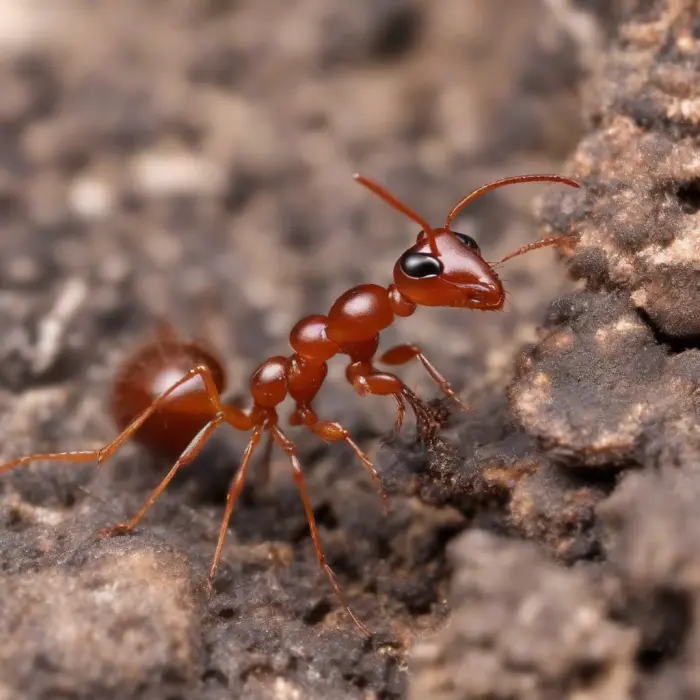
- Lowest numbers: Some Australian “jack jumper” ants have as few as one chromosome in haploid males (n = 1) and two in females (2n = 2).
- High but not record‑breaking: Several lineages of blue butterflies have been known to approach or exceed 200 pairs through extensive fission events, illustrating how holocentric chromosomes can push karyotype boundaries.
- Genome size vs. chromosome count: Some salamanders and lungfish have gigantic genomes with relatively ordinary chromosome counts, underscoring that chromosome number and DNA content are different axes of genome evolution.
Why This Record Matters
Documenting a 229‑pair karyotype does more than set a trivia record. It provides a living system for testing fundamental ideas in evolutionary genetics:
- How flexible is meiosis to extreme partitioning of the genome?
- Do high counts accelerate speciation by creating more opportunities for structural incompatibilities — or are some lineages uniquely buffered against such problems?
- How do recombination rates, mutation load, and adaptation play out when the genome is split into hundreds of independent units?
As cytogenomic methods improve and sampling broadens across understudied invertebrates, additional surprises are likely. Many animal lineages remain poorly karyotyped, and new records may still be hiding in plain sight.
Key Takeaways
- An animal with 229 chromosome pairs (2n = 458) now holds the highest confirmed chromosome count in the animal kingdom.
- Extremely high counts can arise through repeated chromosome fissions, especially in groups with holocentric chromosomes.
- Chromosome number is not the same as genome size; this discovery is about how DNA is packaged, not necessarily how much DNA there is.
- The find opens new avenues to study recombination, gene regulation, and speciation in karyotypically dynamic lineages.
Looking Ahead
The new record underscores a broader lesson: genome architecture is far more malleable than once thought. Between extreme minimalists with only a handful of chromosomes and maximalists with hundreds of pairs, life has explored a wide solution space for packaging and transmitting genetic information. Continued fieldwork, cytogenetics, and chromosome‑scale genomics will reveal just how far that exploration has gone — and how the structure of the genome shapes the tree of life.