


With 229 Pairs, This Beautiful Animal Has The Highest Number Of Chromosomes Of Any Animal
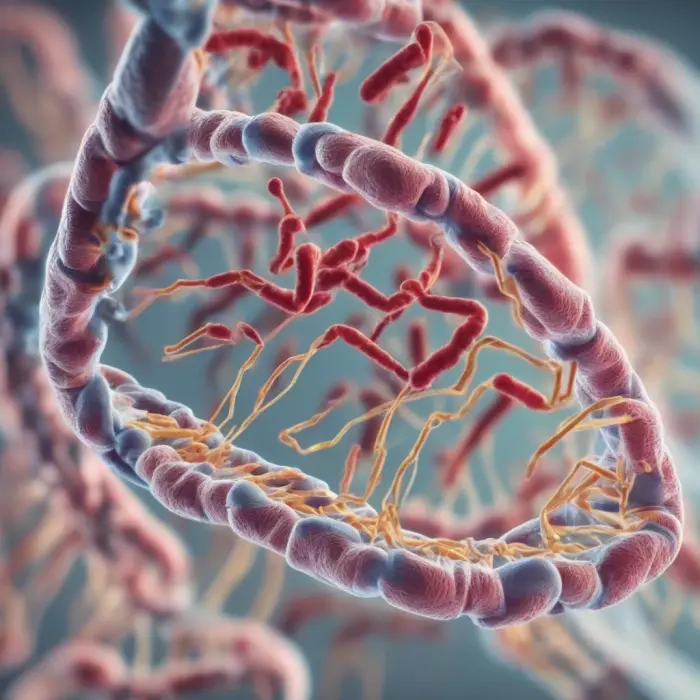
Some of nature’s most extraordinary superlatives hide in plain sight. Case in point: a delicate blue butterfly whose cells pack more chromosomes than any other known animal — an astonishing 229 pairs, or roughly 458 chromosomes in total.
Meet the record holder: a “blue†butterfly with a record-breaking genome
The champion belongs to the “blues,†a group of small, shimmering butterflies in the family Lycaenidae. Within this group, species in the genus Polyommatus — especially those formerly placed in the subgenus Agrodiaetus and native to mountainous regions of the Mediterranean and Central Asia — have evolved extraordinarily high chromosome counts. One such species, often cited by cytogenetic studies and popular science reporting, has been documented with around 229 chromosome pairs (about 458 chromosomes), the highest number recorded for any animal to date.
Exact numbers can vary slightly among populations and studies because counting relies on microscopic spreads of dividing cells, but the headline remains the same: among animals, no one beats these blues for sheer chromosome abundance.
How can a butterfly have so many chromosomes?
Chromosome numbers evolve through structural changes — chiefly fissions (one chromosome splits into two) and fusions (two become one). Over evolutionary timescales, repeated fissions can drive numbers sky-high without necessarily changing the total amount of DNA dramatically.
Butterflies, like other Lepidoptera, have a useful quirk: their chromosomes are holocentric. Instead of having a single constricted “centromere,†holocentric chromosomes attach to the spindle along their entire length. This architecture can make fissions and fusions less disastrous during cell division, helping lineages tolerate — and accumulate — dramatic shifts in chromosome number.
In short, these butterflies didn’t “cram†in more genes. They partitioned their genome into many more pieces.
What does a sky-high chromosome count mean for the animal?
Surprisingly little changes on the outside. Many closely related “blue†butterflies look nearly identical even as their chromosome counts diverge wildly. That mismatch — similar bodies, very different karyotypes — is part of what makes them so fascinating to evolutionary biologists.
Under the hood, though, a proliferating chromosome count can influence:
- Meiosis mechanics: During gamete formation, hundreds of pairs must find and match their partners correctly. Holocentric structure and careful pairing rules help maintain order.
- Reproductive isolation: Differences in chromosome number and structure can reduce hybrid fertility, promoting the rise of new species — a process known as karyotypic or chromosomal speciation.
- Evolutionary flexibility: Frequent rearrangements may shuffle genetic neighborhoods, potentially affecting gene regulation and adaptation.
Chromosome count does not equal “complexityâ€
It’s tempting to assume that more chromosomes or more DNA means a more complex organism. Biology doesn’t work that way. Genome size and chromosome number vary enormously across life with no simple correlation to intelligence, behavior, or body plan — a classic illustration of the “C‑value paradox.â€
Consider a few benchmarks:
- Humans: 23 pairs (46 total)
- Dogs: 39 pairs (78 total)
- Red viscacha rat (a record among mammals): about 102 total
- Sturgeons and paddlefish: many species are polyploid, often exceeding 100 chromosomes
- Jack jumper ant (Myrmecia pilosula): females have just 1 pair (2 total), and males carry only one chromosome
Plants take this to even greater extremes. Some ferns have well over a thousand chromosomes — orders of magnitude beyond any animal. But the prize for animals still sits with these blues.
How do scientists count that many chromosomes?
Cytogeneticists typically examine cells frozen in the middle of division, when chromosomes are condensed and visible. In butterflies, meiotic cells from male reproductive tissue provide clean, countable spreads. Researchers fix, stain, and photograph the cells, then tally the chromosomes pair by pair.
When numbers push into the hundreds, counting becomes painstaking. Overlapping strands, small microchromosomes, and slight preparation differences can nudge counts up or down by a few — which is why you’ll often see values reported as ranges and why multiple preparations are examined before drawing conclusions.
Why this matters for evolution and biodiversity
The “blue†butterflies with sky-high chromosome numbers have become a model system for studying:
- Rapid karyotype evolution: Closely related species can differ by dozens or hundreds of chromosomes.
- Cryptic species: Nearly identical-looking butterflies can be sharply distinct genetically and cytologically.
- Speciation mechanisms: Chromosomal rearrangements may help seed new species by reducing hybrid fertility and fostering genetic divergence.
For conservation and taxonomy, chromosome data can reveal hidden diversity that morphology alone misses — crucial for protecting distinct lineages that occupy narrow habitats, such as isolated mountain ranges.
Beauty meets biological extremes
Beyond the numbers, these butterflies are genuinely beautiful: males often flash iridescent sky-blue uppersides, while females tend to be subtler browns and grays with delicate spotting. Many occupy flower-rich meadows and rocky slopes, where they pollinate and serve as indicators of healthy ecosystems.
That such a small, fragile creature carries the animal kingdom’s most fragmented karyotype is a reminder that evolutionary marvels are as likely to be found in a highland meadow as in a deep-sea trench.
Open questions
- Functional limits: Is there an upper bound to how many chromosomes an animal can maintain while still reproducing efficiently?
- Genomic consequences: How do gene regulation and recombination patterns shift as chromosome numbers soar?
- Dynamics over time: Are extreme counts stable, or do lineages oscillate between fission-heavy and fusion-heavy phases?
- Comparative insights: What can holocentric lineages teach us about genome engineering, repair, and resilience?