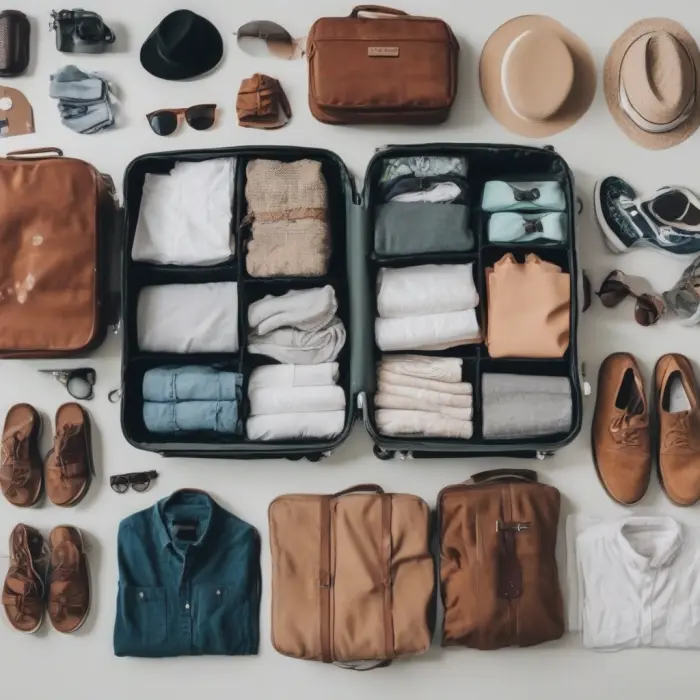
A useful packing list begins with the trip you actually plan to take. Write down the activities, clothing needs and laundry arrangements you expect. Separate essentials from optional extras rather than following a universal item count.
Lay out possible outfits and look for pieces you want to wear together. Consider weather information for your destination when departure approaches. A coordinated selection is a personal organising choice, not a guarantee that a particular fabric or garment will suit every climate.
Try the actual bag before buying organisers. Compare folded and rolled clothes, and group items in a way you understand. Small pouches may help distinguish cables, toiletries or accessories, but extra containers also occupy space.
Plan access as well as capacity. Put items you expect to need during the journey somewhere you can reach without unpacking everything. Keep shoes and used clothes separate from clean belongings, and choose suitable containers for toiletries rather than assuming an improvised seal cannot leak.
Check current requirements directly with your carrier and the relevant authorities, including baggage, batteries, liquids and any restricted personal items. This article does not state universal transport limits, medical packing instructions or border rules. The requirements for the actual journey take priority over a generic checklist.
Close the packed bag and check whether you can handle it comfortably. After returning, note what you used and what stayed untouched, then revise your list. A repeatable routine can reflect your preferences without promising a stress-free trip or a fixed saving in space or time.


Discussion