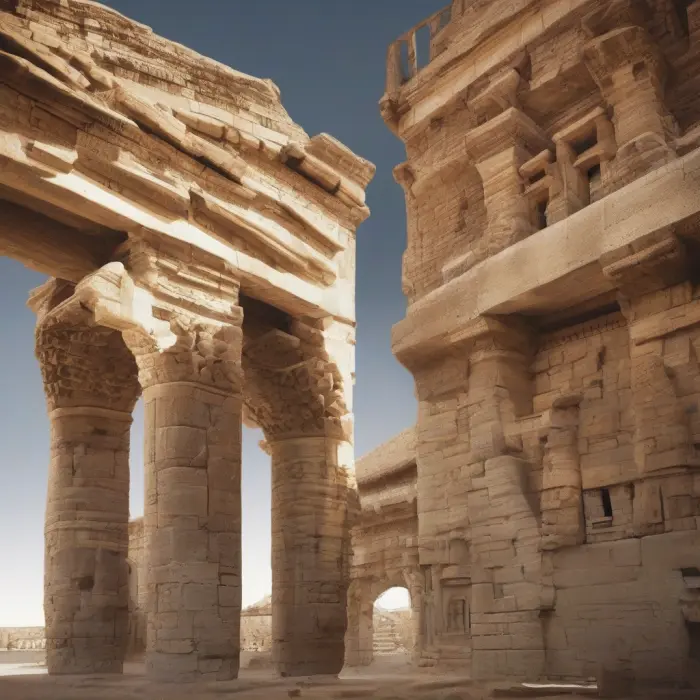
Ancient Artifacts: What Objects Can—and Cannot—Tell Us
How archaeologists use artifacts to reconstruct everyday life, assess legends, and distinguish evidence from speculation.
Stories in this section
495 articles
How archaeologists use artifacts to reconstruct everyday life, assess legends, and distinguish evidence from speculation.
Warming, shifting rainfall, rising seas and other climate changes affect habitats and the relationships among species. Understanding these processes helps explain why ecological responses vary from place to place.
Cryptography uses mathematics and carefully managed keys to protect information, verify identity, and detect tampering. Here is how its main tools work—and what they cannot guarantee.
From Giza and Machu Picchu to Epidaurus and Angkor Wat, surviving buildings reward curiosity without requiring exaggerated mysteries.
Exoplanets challenge familiar ideas about planets. Learn how astronomers find them, why their variety matters, and what observations can—and cannot—tell us about distant worlds.
Illusions reveal how perception combines sensory input with context, expectation, and attention. Understanding them offers a useful glimpse into how the brain makes sense of an ambiguous world.
Birds share a basic body plan, but their feathers, senses and behaviors are adapted in strikingly different ways. Here’s how some familiar abilities work—and why not every bird does them alike.
Virtual reality can make some lessons more immersive, but its educational value depends on thoughtful design, accessibility, and a clear purpose—not novelty alone.
Ancient manuscripts are more than old texts: their materials, handwriting, corrections and later reuse can reveal how people made, read and preserved books.
How black holes form and grow, how astronomers detect them through their effects, and what remains uncertain about their interiors and origins.
A practical guide to cultural diversity, the ways traditions carry meaning, and how to approach differences with curiosity and respect.
A clear guide to gene editing, including CRISPR, how changes are made, the difference between somatic and heritable edits, and why safety and ethics matter.